
Carolina Wren
Return to visitors index
Scientific Name:
Thryothorus ludovicianus
Brief Description: The Carolina Wren is a plump, energetic songbird native to the eastern United States. Measuring about 5.5 inches in length, it is easily recognized by its slightly down-curved bill and long, perky tail that is almost always cocked straight upward. These territorial birds are permanent residents in the region and do not migrate, often making themselves known through their loud, cheerful, and repetitive song. They are highly adaptive and frequently nest near humans in backyards, flower pots, and even mailboxes.
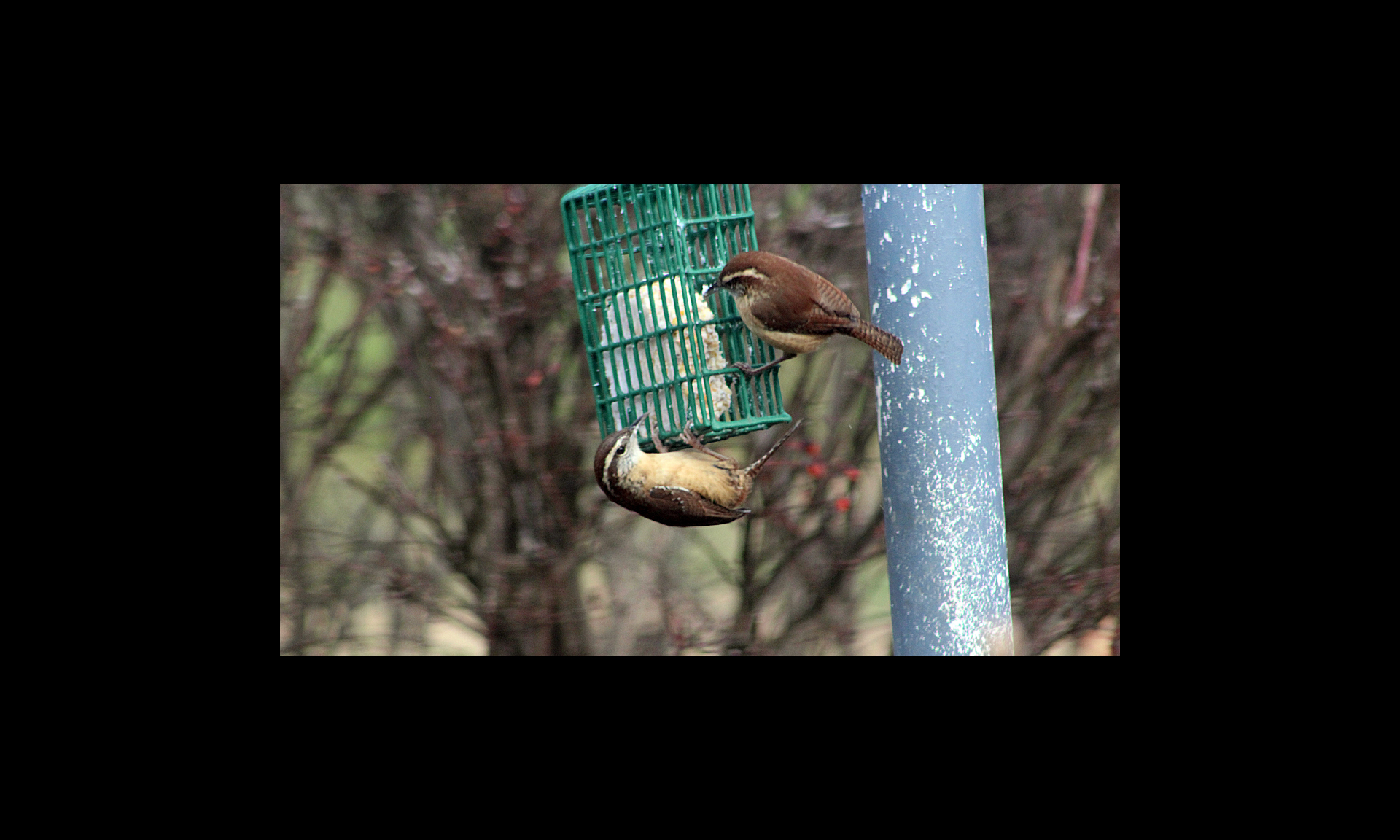
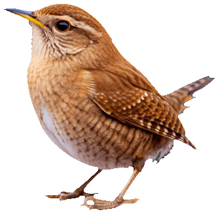
Plumage: The Carolina Wren has distinctive, rich plumage featuring bright, unpatterned reddish-brown upperparts and a warm buffy-orange or cinnamon underbelly. Its most notable features include a bold white stripe above the eye, a contrasting white chin and throat, and a tail that is distinctly barred with black and white. The plumage of the Carolina Wren is identical across both sexes, though males are slightly larger on average. Young Carolina Wrens look almost identical to adults, but their plumage is typically slightly duller or lighter overall.
Habitat: Carolina Wrens live year-round in the eastern half of the United States, stretching south into northeastern Mexico and extending northward into southern Ontario, Canada. They permanently reside in wooded thickets, brushy undergrowth, overgrown farmlands, and suburban gardens rather than migrating. They are permanent residents across their territories and will adapt to areas that offer plenty of low, dense cover (like tangles, fallen trees, and brush piles) to hide and forage for insects. Because they do not migrate, they rely on backyard feeders, suet, and dense brush to survive harsher, colder winters. They are also famous for building their nests in unconventional places around human habitation, including flower pots, hanging ferns, mailboxes, and even old boots.
Egg & Nest Details: Carolina Wrens build enclosed, dome-shaped nests with a small side entrance. They frequently nest in cavities or crevices, including flower pots, shoes, mailboxes, and garages. The female lays 3 to 7 creamy-white or pinkish eggs with reddish-brown speckles, typically laying one egg per day. Carolina Wren nests are bulky and loosely constructed using diverse materials like twigs, bark strips, dead leaves, moss, pine needles, feathers, shed snake skin, and even bits of plastic or string. The male usually builds multiple "pilot nests," and the female selects her preferred site before finishing the inner bowl with softer linings.
Diet: Carolina Wrens are primarily insectivores that forage in dense brush, rotting logs, and leaf litter. Their diet consists of 94% animal matter—mainly spiders, caterpillars, beetles, and grasshoppers. During winter or when insects are scarce, they supplement their diet with seeds, berries, and occasional small reptiles or amphibians. Carolina Wrens can also be attracted to backyard feeding stations.
Sounds: The Carolina Wren is famous for delivering an incredibly loud, ringing vocalization that completely belies its tiny, less-than-an-ounce size. The most famous mnemonic is a rapid, rolling "tea-kettle, tea-kettle, tea-kettle". Each song consists of two-to-three-parted syllables and lasts roughly two seconds. Individual males boast a massive repertoire of 17 to 55 song variations. They repeat a single variation about 15 times before switching to a new melody. They are relentless vocalists, sometimes singing nearly 3,000 times in one day.
Brief Description: The Carolina Wren is a plump, energetic songbird native to the eastern United States. Measuring about 5.5 inches in length, it is easily recognized by its slightly down-curved bill and long, perky tail that is almost always cocked straight upward. These territorial birds are permanent residents in the region and do not migrate, often making themselves known through their loud, cheerful, and repetitive song. They are highly adaptive and frequently nest near humans in backyards, flower pots, and even mailboxes.
Plumage: The Carolina Wren has distinctive, rich plumage featuring bright, unpatterned reddish-brown upperparts and a warm buffy-orange or cinnamon underbelly. Its most notable features include a bold white stripe above the eye, a contrasting white chin and throat, and a tail that is distinctly barred with black and white. The plumage of the Carolina Wren is identical across both sexes, though males are slightly larger on average. Young Carolina Wrens look almost identical to adults, but their plumage is typically slightly duller or lighter overall.
Habitat: Carolina Wrens live year-round in the eastern half of the United States, stretching south into northeastern Mexico and extending northward into southern Ontario, Canada. They permanently reside in wooded thickets, brushy undergrowth, overgrown farmlands, and suburban gardens rather than migrating. They are permanent residents across their territories and will adapt to areas that offer plenty of low, dense cover (like tangles, fallen trees, and brush piles) to hide and forage for insects. Because they do not migrate, they rely on backyard feeders, suet, and dense brush to survive harsher, colder winters. They are also famous for building their nests in unconventional places around human habitation, including flower pots, hanging ferns, mailboxes, and even old boots.
Egg & Nest Details: Carolina Wrens build enclosed, dome-shaped nests with a small side entrance. They frequently nest in cavities or crevices, including flower pots, shoes, mailboxes, and garages. The female lays 3 to 7 creamy-white or pinkish eggs with reddish-brown speckles, typically laying one egg per day. Carolina Wren nests are bulky and loosely constructed using diverse materials like twigs, bark strips, dead leaves, moss, pine needles, feathers, shed snake skin, and even bits of plastic or string. The male usually builds multiple "pilot nests," and the female selects her preferred site before finishing the inner bowl with softer linings.
Diet: Carolina Wrens are primarily insectivores that forage in dense brush, rotting logs, and leaf litter. Their diet consists of 94% animal matter—mainly spiders, caterpillars, beetles, and grasshoppers. During winter or when insects are scarce, they supplement their diet with seeds, berries, and occasional small reptiles or amphibians. Carolina Wrens can also be attracted to backyard feeding stations.
Sounds: The Carolina Wren is famous for delivering an incredibly loud, ringing vocalization that completely belies its tiny, less-than-an-ounce size. The most famous mnemonic is a rapid, rolling "tea-kettle, tea-kettle, tea-kettle". Each song consists of two-to-three-parted syllables and lasts roughly two seconds. Individual males boast a massive repertoire of 17 to 55 song variations. They repeat a single variation about 15 times before switching to a new melody. They are relentless vocalists, sometimes singing nearly 3,000 times in one day.