Blue Jay
Return to visitors index
Scientific Name:
Cyanocitta cristata
Brief Description: The Blue Jay is a large, highly intelligent songbird native to eastern and central North America. Belonging to the corvid family (which includes crows and ravens), it is widely recognized for its striking patterns, bold personality, and loud, raucous calls. Their feathers do not actually contain blue pigment. The color is an optical illusion caused by microscopic structures that scatter blue light. They measure 9 to 12 inches long with a 13 to 17-inch wingspan. Males and females look completely identical.
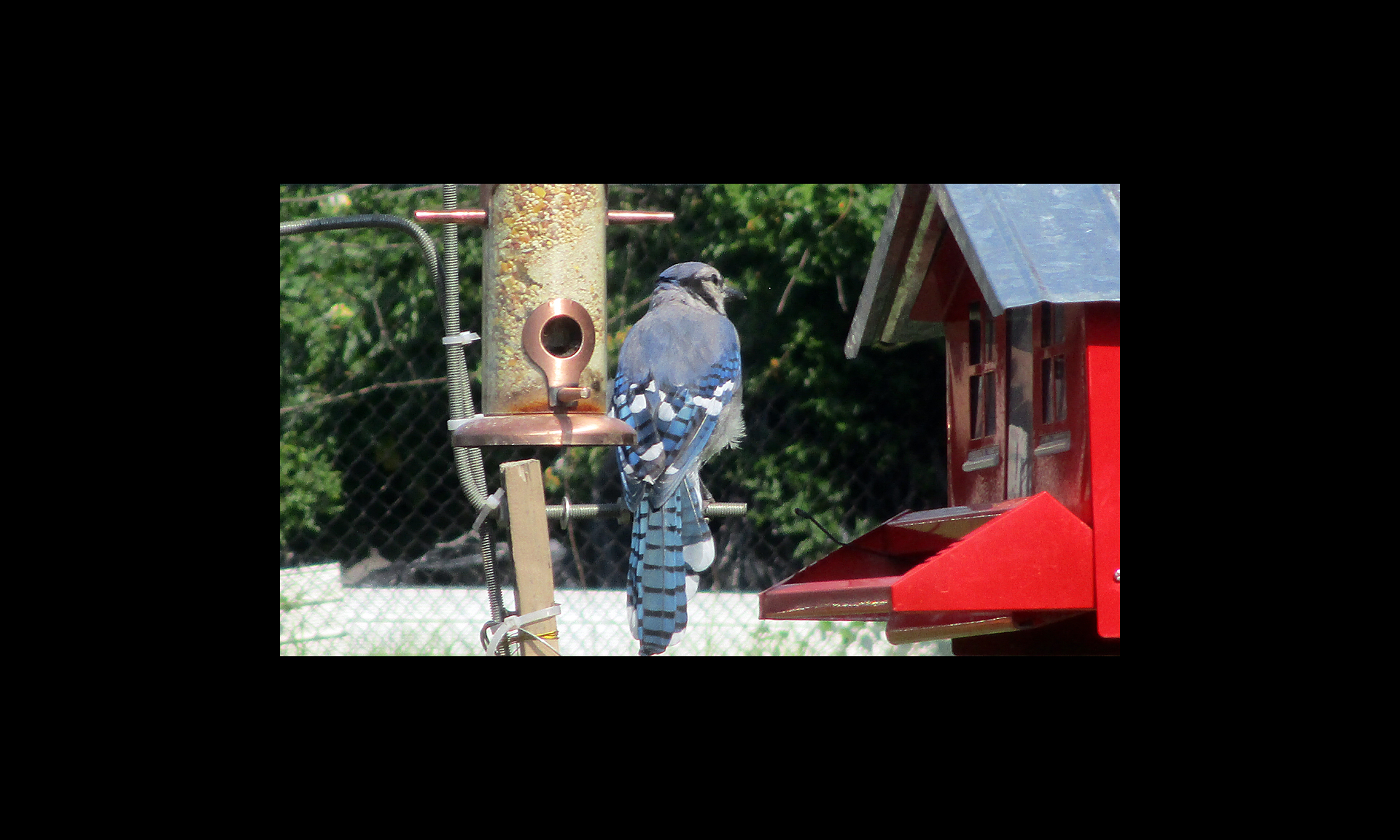
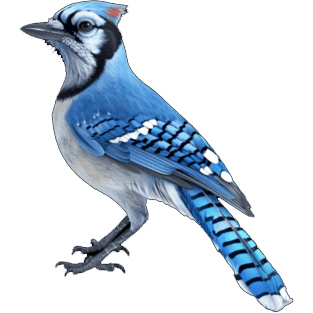
Plumage: Blue Jay feathers do not actually contain any blue pigment. Their feathers are naturally brown, derived from a pigment called melanin. The vibrant blue hue is caused by the microscopic structure of the feather's barbs, which scatter light and reflect only the short, blue wavelengths back to the human eye—a phenomenon known as structural coloration. The primary feathers and the rounded tail boast bold, alternating bars of black, sky-blue, and white. The feathers forming the crest, back, and shoulders range from lavender-blue to deep, brilliant blue. The face and nasal plumes are pale grayish-white, bordered by a black line. A distinct black band circles the back of the neck, running down the sides of the throat.
Habitat: Blue Jays thrive across eastern and central North America. They inhabit deciduous, coniferous, and mixed forests—particularly preferring oak and beech woodlands and forest edges. Highly adaptable, they also flourish in suburban gardens, parks, and urban areas with mature trees and bird feeders. They tend to avoid deep, unbroken coniferous forests and prefer forest edges where clearings exist. Blue Jays have adapted remarkably well to human activity. You can regularly find them in city parks, golf courses, and residential neighborhoods that offer ample tree cover and consistent food sources (like backyard feeders).
Egg & Nest Details: Blue Jays are fiercely loyal, monogamous birds that build bulky, open-cup nests in the branches of deciduous or coniferous trees, typically 10 to 30 feet above the ground. Females lay 3 to 7 pale blue, greenish, or yellowish eggs with brown or gray spots, which hatch after 16 to 18 days of incubation. Blue Jays build their nests together, with the male usually gathering materials and the female doing the majority of the construction. Constructed from a bulky mix of twigs, grass, bark strips, moss, and sometimes paper or cloth, often bound together with mud. Positioned in the vertical crotch of a tree trunk or on a horizontal fork in a branch, typically 10 to 30 feet off the ground.Behavior: Pairs become exceptionally quiet and secretive while building to avoid drawing attention to the nest.
Diet: Blue Jays are opportunistic omnivores. Their favorite treats include whole or shelled peanuts, acorns, black oil sunflower seeds, and suet cakes. In the wild, they also eat insects (like caterpillars and beetles), berries, and small fruits. To attract Blue Jays to your backyard, you can offer these foods in large, open platform feeders or specialized peanut cages, as these larger birds do not fit comfortably on small hanging tube feeders.
Sounds: Blue Jays possess an incredibly diverse vocal repertoire, making them some of the most creative and loud vocalists in the avian world. As members of the highly intelligent corvid family, they use distinct calls to defend territory, sound alarms, and communicate within their social groups. The primary categories of Blue Jay sounds. The "Jeer" Call: A loud, harsh, and piercing "jay-jay-jay" or "jeer-jeer-jeer". A remarkably accurate imitation of bird-of-prey cries, most commonly the Red-shouldered Hawk or Red-tailed Hawk. A musical, two-syllable squeaking sound often described as "queedle-queedle" or "twee-dee". A soft, clicking, mechanical rattle that mimics the sound of shaking a small container of pebbles.
Brief Description: The Blue Jay is a large, highly intelligent songbird native to eastern and central North America. Belonging to the corvid family (which includes crows and ravens), it is widely recognized for its striking patterns, bold personality, and loud, raucous calls. Their feathers do not actually contain blue pigment. The color is an optical illusion caused by microscopic structures that scatter blue light. They measure 9 to 12 inches long with a 13 to 17-inch wingspan. Males and females look completely identical.
Plumage: Blue Jay feathers do not actually contain any blue pigment. Their feathers are naturally brown, derived from a pigment called melanin. The vibrant blue hue is caused by the microscopic structure of the feather's barbs, which scatter light and reflect only the short, blue wavelengths back to the human eye—a phenomenon known as structural coloration. The primary feathers and the rounded tail boast bold, alternating bars of black, sky-blue, and white. The feathers forming the crest, back, and shoulders range from lavender-blue to deep, brilliant blue. The face and nasal plumes are pale grayish-white, bordered by a black line. A distinct black band circles the back of the neck, running down the sides of the throat.
Habitat: Blue Jays thrive across eastern and central North America. They inhabit deciduous, coniferous, and mixed forests—particularly preferring oak and beech woodlands and forest edges. Highly adaptable, they also flourish in suburban gardens, parks, and urban areas with mature trees and bird feeders. They tend to avoid deep, unbroken coniferous forests and prefer forest edges where clearings exist. Blue Jays have adapted remarkably well to human activity. You can regularly find them in city parks, golf courses, and residential neighborhoods that offer ample tree cover and consistent food sources (like backyard feeders).
Egg & Nest Details: Blue Jays are fiercely loyal, monogamous birds that build bulky, open-cup nests in the branches of deciduous or coniferous trees, typically 10 to 30 feet above the ground. Females lay 3 to 7 pale blue, greenish, or yellowish eggs with brown or gray spots, which hatch after 16 to 18 days of incubation. Blue Jays build their nests together, with the male usually gathering materials and the female doing the majority of the construction. Constructed from a bulky mix of twigs, grass, bark strips, moss, and sometimes paper or cloth, often bound together with mud. Positioned in the vertical crotch of a tree trunk or on a horizontal fork in a branch, typically 10 to 30 feet off the ground.Behavior: Pairs become exceptionally quiet and secretive while building to avoid drawing attention to the nest.
Diet: Blue Jays are opportunistic omnivores. Their favorite treats include whole or shelled peanuts, acorns, black oil sunflower seeds, and suet cakes. In the wild, they also eat insects (like caterpillars and beetles), berries, and small fruits. To attract Blue Jays to your backyard, you can offer these foods in large, open platform feeders or specialized peanut cages, as these larger birds do not fit comfortably on small hanging tube feeders.
Sounds: Blue Jays possess an incredibly diverse vocal repertoire, making them some of the most creative and loud vocalists in the avian world. As members of the highly intelligent corvid family, they use distinct calls to defend territory, sound alarms, and communicate within their social groups. The primary categories of Blue Jay sounds. The "Jeer" Call: A loud, harsh, and piercing "jay-jay-jay" or "jeer-jeer-jeer". A remarkably accurate imitation of bird-of-prey cries, most commonly the Red-shouldered Hawk or Red-tailed Hawk. A musical, two-syllable squeaking sound often described as "queedle-queedle" or "twee-dee". A soft, clicking, mechanical rattle that mimics the sound of shaking a small container of pebbles.