Black-Capped Chickadee
Return to visitors index
Scientific Name:
Poecile atricapillus
Brief Description: The Black-capped Chickadee is a tiny, energetic songbird with a large, round head and a distinct black cap and bib separated by stark white cheeks. Weighing only 0.3–0.5 ounces, 4.5 to 6 inches long. They have a compact, round body, a short, pointed bill, and a long, narrow tail. Highly social and non-migratory. They are known for caching food (storing it in bark or crevices) to survive harsh winters.
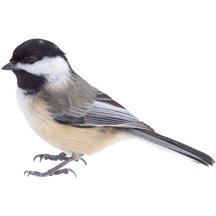
Plumage: The Black-capped Chickadee features a distinct plumage with a solid black cap and bib, stark white cheeks, a soft gray back, and dark gray wings edged with pristine white. Their underparts are pale white, shading into rich, buffy-reddish flanks. Sexes look identical to human observers, though males boast larger black bibs.
Habitat: Black-capped Chickadees thrive in deciduous and mixed forests across North America. They are frequently found near forest edges, willow thickets, and cottonwood groves. Highly adaptable, they readily inhabit suburban parks, shade trees, and backyards, provided there are suitable spots to nest and forage. These non-migratory birds are particularly drawn to areas with birch and alder trees, which offer both excellent foraging grounds for insects and softer wood for nesting. In the winter, small flocks often shift slightly into dense coniferous forests for better shelter against the cold. Chickadees require territories that include dead trees or snags, as they are cavity nesters.
Egg & Nest Details: Black-capped Chickadees construct cup-shaped nests in natural tree cavities, dead snags, or nest boxes using a moss foundation layered with soft animal fur. The female lays 6 to 8 white, reddish-brown speckled eggs, and temporarily hides them under fur or moss when leaving the nest. Chickadees usually nest in birch, alder, or other decaying wood. Both the male and female may excavate the cavity, but the female is solely responsible for building the nest cup. The structure is built in two distinct stages: The Foundation: The female lines the bottom of the cavity with a thick layer of coarse material, primarily moss. The Lining: She tops the moss with an insulating layer of soft plant fibers and animal fur (such as rabbit hair or pet fur) to keep the eggs warm.
Diet: The Black-capped Chickadee diet shifts seasonally: they are primarily insectivores in spring and summer (70-90% animal matter) and shift to a diet composed of roughly 50% seeds, berries, and 50% insects in the fall and winter. In winter, they rely heavily on high-energy foods like suet, peanuts, and sunflower seeds. During the breeding season, the chickadee's diet consists almost entirely of animal matter, with caterpillars serving as the primary food source . They also forage for a variety of other insects, such as beetles, aphids, moths, and ants, as well as spiders and insect eggs.
Sounds: The Black-capped Chickadee is famous for its complex, language-like vocalizations. This tiny bird produces up to 16 distinct sounds to share information about food, social status, and predators. The number of "dee" notes at the end increases based on danger level. A stationary predator like a cat or a small owl prompts a long string of "dees" to rally the flock for mobbing.
Brief Description: The Black-capped Chickadee is a tiny, energetic songbird with a large, round head and a distinct black cap and bib separated by stark white cheeks. Weighing only 0.3–0.5 ounces, 4.5 to 6 inches long. They have a compact, round body, a short, pointed bill, and a long, narrow tail. Highly social and non-migratory. They are known for caching food (storing it in bark or crevices) to survive harsh winters.
Plumage: The Black-capped Chickadee features a distinct plumage with a solid black cap and bib, stark white cheeks, a soft gray back, and dark gray wings edged with pristine white. Their underparts are pale white, shading into rich, buffy-reddish flanks. Sexes look identical to human observers, though males boast larger black bibs.
Habitat: Black-capped Chickadees thrive in deciduous and mixed forests across North America. They are frequently found near forest edges, willow thickets, and cottonwood groves. Highly adaptable, they readily inhabit suburban parks, shade trees, and backyards, provided there are suitable spots to nest and forage. These non-migratory birds are particularly drawn to areas with birch and alder trees, which offer both excellent foraging grounds for insects and softer wood for nesting. In the winter, small flocks often shift slightly into dense coniferous forests for better shelter against the cold. Chickadees require territories that include dead trees or snags, as they are cavity nesters.
Egg & Nest Details: Black-capped Chickadees construct cup-shaped nests in natural tree cavities, dead snags, or nest boxes using a moss foundation layered with soft animal fur. The female lays 6 to 8 white, reddish-brown speckled eggs, and temporarily hides them under fur or moss when leaving the nest. Chickadees usually nest in birch, alder, or other decaying wood. Both the male and female may excavate the cavity, but the female is solely responsible for building the nest cup. The structure is built in two distinct stages: The Foundation: The female lines the bottom of the cavity with a thick layer of coarse material, primarily moss. The Lining: She tops the moss with an insulating layer of soft plant fibers and animal fur (such as rabbit hair or pet fur) to keep the eggs warm.
Diet: The Black-capped Chickadee diet shifts seasonally: they are primarily insectivores in spring and summer (70-90% animal matter) and shift to a diet composed of roughly 50% seeds, berries, and 50% insects in the fall and winter. In winter, they rely heavily on high-energy foods like suet, peanuts, and sunflower seeds. During the breeding season, the chickadee's diet consists almost entirely of animal matter, with caterpillars serving as the primary food source . They also forage for a variety of other insects, such as beetles, aphids, moths, and ants, as well as spiders and insect eggs.
Sounds: The Black-capped Chickadee is famous for its complex, language-like vocalizations. This tiny bird produces up to 16 distinct sounds to share information about food, social status, and predators. The number of "dee" notes at the end increases based on danger level. A stationary predator like a cat or a small owl prompts a long string of "dees" to rally the flock for mobbing.