Red Bellied Woodpecker
Return to visitors index
Scientific Name:
Melanerpes carolinus
Brief Description: The Red-bellied Woodpecker is a medium-sized, strikingly patterned woodpecker native to the eastern half of the United States. Despite its name, its most prominent feature is its vibrant red crown, while the red patch on its belly is very faint and usually hidden when the bird is perched against tree trunks. Size and Shape: It is a sleek, round-headed bird roughly the size of an American Robin. Adults typically measure 9 to 10.5 inches in length, have a wingspan of 13 to 18 inches, and weigh between 2.0 and 3.2 ounces. Like most woodpeckers, they have strong feet with two toes facing forward and two facing backward. This layout, combined with very stiff tail feathers acting as a kickstand, allows them to easily scale vertical tree bark. They possess a long, barbed, sticky tongue that can extend nearly 2 inches past the tip of their beak to pull grubs and insects from deep wood crevices. When retracted, the tongue actually wraps around the inside of their skull.
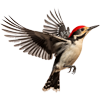
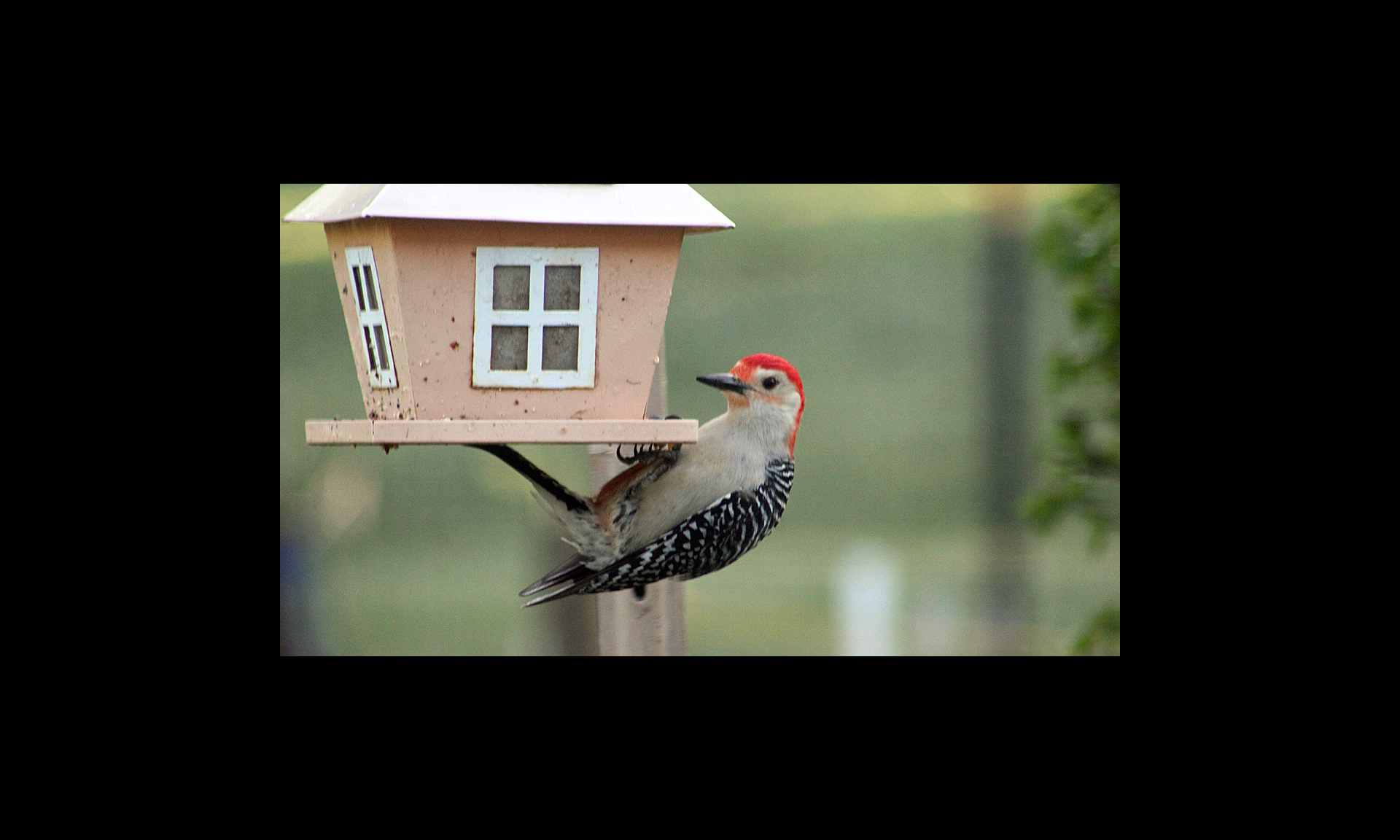
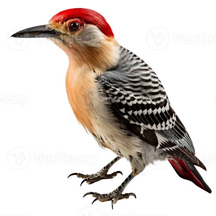
Plumage: The Red-bellied Woodpecker has a "zebra" striped back and pale belly. Despite its name, its small red belly patch is rarely seen. Males feature a bright red cap extending from the bill to the neck. Females have a gray crown and red only on the back of the neck. Back and Wings: Black-and-white stripes. Males have a full red cap; females have a gray crown and a red nape. Underparts: Pale gray with a faint reddish or pinkish blush on the belly. In Flight: Flashing white patches appear on the wingtips and rump. Juveniles: They look similar to adults but are duller. Their back stripes are not as bright, and they lack the adult's bold red head markings.
Habitat: The Red-bellied Woodpecker is a year-round resident throughout the eastern half of the continental United States. Their habitat spans from the Atlantic coast and Gulf of Mexico westward to the Great Plains, reaching as far north as southern Canada, Michigan, and New York. They primarily inhabit deciduous forests, wetlands, and heavily wooded suburban areas. While traditionally a southeastern bird, they have been rapidly expanding their breeding range northward into New England and beyond over the last century.
Egg & Nest Details: Red-bellied Woodpeckers carve holes in dead trees, branches, or nest boxes to create their nests. They lay 2-6 smooth, white eggs directly on wood chips left inside the cavity. Both parents incubate the eggs for 12-14 days and take care of the chicks. Red-bellied Woodpeckers do not use twigs or leaves like other birds to build a nest. Instead, they excavate deep cavities in dead trees, dead limbs of live trees, fence posts, or wooden nest boxes. The male usually starts the hole and taps to attract a female. Both birds then finish digging a cylindrical chamber that is about 22 to 32 cm deep. The pair leaves a soft bed of wood chips at the bottom for the eggs. They often excavate a brand new cavity every year. The female lays one egg per day until her clutch is complete. A full clutch contains between 2 and 6 solid white eggs. Each egg is small, measuring about 2.2 to 2.9 cm long.
Diet: Red-bellied woodpeckers are omnivores that eat a diverse diet of insects, nuts, seeds, and fruits. While they forage for beetles and ants in tree bark, they actually consume more plant matter—like acorns, berries, and seeds—than many other woodpeckers. They will even eat tree sap, lizards, tree frogs, and bird eggs. Because of their varied palate, they are easy to attract to backyard feeders. Suet: Especially popular during the colder winter months when insects are scarce. Nuts: Peanuts are a particular favorite; they will wedge larger nuts into bark crevices to crack them open. Seeds: Black oil sunflower seeds. They frequently eat fresh fruit (like oranges and grapes), grape jelly, and have even been spotted drinking nectar from hummingbird feeders.
Sounds: The Red-bellied Woodpecker is a highly vocal bird known for its shrill, rolling "churr" or "kwirr" call. Instead of singing like songbirds, they communicate through a diverse system of unique vocalizations and rhythmic drumming to establish territory and connect with mates. The "Churr" or "Kwirr" Trill: A loud, rolling, throaty sound used by both sexes year-round to announce their presence or claim territory. The Contact Call ("Cha-Cha-Cha"): A gruff, nasal, coughing series of notes typically used between a mated pair to stay in contact. It can also be shortened to a single, sharp "che" or "chi" note. The Squeaky Call: A high-pitched, squeaky sound often compared to a wet sponge or a flying squeegee rubbing against glass. The "Woika-Woika" Call: A low, throaty growl or chatter exchanged between birds when they are in close proximity to one another.
Brief Description: The Red-bellied Woodpecker is a medium-sized, strikingly patterned woodpecker native to the eastern half of the United States. Despite its name, its most prominent feature is its vibrant red crown, while the red patch on its belly is very faint and usually hidden when the bird is perched against tree trunks. Size and Shape: It is a sleek, round-headed bird roughly the size of an American Robin. Adults typically measure 9 to 10.5 inches in length, have a wingspan of 13 to 18 inches, and weigh between 2.0 and 3.2 ounces. Like most woodpeckers, they have strong feet with two toes facing forward and two facing backward. This layout, combined with very stiff tail feathers acting as a kickstand, allows them to easily scale vertical tree bark. They possess a long, barbed, sticky tongue that can extend nearly 2 inches past the tip of their beak to pull grubs and insects from deep wood crevices. When retracted, the tongue actually wraps around the inside of their skull.
Plumage: The Red-bellied Woodpecker has a "zebra" striped back and pale belly. Despite its name, its small red belly patch is rarely seen. Males feature a bright red cap extending from the bill to the neck. Females have a gray crown and red only on the back of the neck. Back and Wings: Black-and-white stripes. Males have a full red cap; females have a gray crown and a red nape. Underparts: Pale gray with a faint reddish or pinkish blush on the belly. In Flight: Flashing white patches appear on the wingtips and rump. Juveniles: They look similar to adults but are duller. Their back stripes are not as bright, and they lack the adult's bold red head markings.
Habitat: The Red-bellied Woodpecker is a year-round resident throughout the eastern half of the continental United States. Their habitat spans from the Atlantic coast and Gulf of Mexico westward to the Great Plains, reaching as far north as southern Canada, Michigan, and New York. They primarily inhabit deciduous forests, wetlands, and heavily wooded suburban areas. While traditionally a southeastern bird, they have been rapidly expanding their breeding range northward into New England and beyond over the last century.
Egg & Nest Details: Red-bellied Woodpeckers carve holes in dead trees, branches, or nest boxes to create their nests. They lay 2-6 smooth, white eggs directly on wood chips left inside the cavity. Both parents incubate the eggs for 12-14 days and take care of the chicks. Red-bellied Woodpeckers do not use twigs or leaves like other birds to build a nest. Instead, they excavate deep cavities in dead trees, dead limbs of live trees, fence posts, or wooden nest boxes. The male usually starts the hole and taps to attract a female. Both birds then finish digging a cylindrical chamber that is about 22 to 32 cm deep. The pair leaves a soft bed of wood chips at the bottom for the eggs. They often excavate a brand new cavity every year. The female lays one egg per day until her clutch is complete. A full clutch contains between 2 and 6 solid white eggs. Each egg is small, measuring about 2.2 to 2.9 cm long.
Diet: Red-bellied woodpeckers are omnivores that eat a diverse diet of insects, nuts, seeds, and fruits. While they forage for beetles and ants in tree bark, they actually consume more plant matter—like acorns, berries, and seeds—than many other woodpeckers. They will even eat tree sap, lizards, tree frogs, and bird eggs. Because of their varied palate, they are easy to attract to backyard feeders. Suet: Especially popular during the colder winter months when insects are scarce. Nuts: Peanuts are a particular favorite; they will wedge larger nuts into bark crevices to crack them open. Seeds: Black oil sunflower seeds. They frequently eat fresh fruit (like oranges and grapes), grape jelly, and have even been spotted drinking nectar from hummingbird feeders.
Sounds: The Red-bellied Woodpecker is a highly vocal bird known for its shrill, rolling "churr" or "kwirr" call. Instead of singing like songbirds, they communicate through a diverse system of unique vocalizations and rhythmic drumming to establish territory and connect with mates. The "Churr" or "Kwirr" Trill: A loud, rolling, throaty sound used by both sexes year-round to announce their presence or claim territory. The Contact Call ("Cha-Cha-Cha"): A gruff, nasal, coughing series of notes typically used between a mated pair to stay in contact. It can also be shortened to a single, sharp "che" or "chi" note. The Squeaky Call: A high-pitched, squeaky sound often compared to a wet sponge or a flying squeegee rubbing against glass. The "Woika-Woika" Call: A low, throaty growl or chatter exchanged between birds when they are in close proximity to one another.