Northern Cardinal
Return to visitors index
Scientific Name:
Cardinalis cardinalis
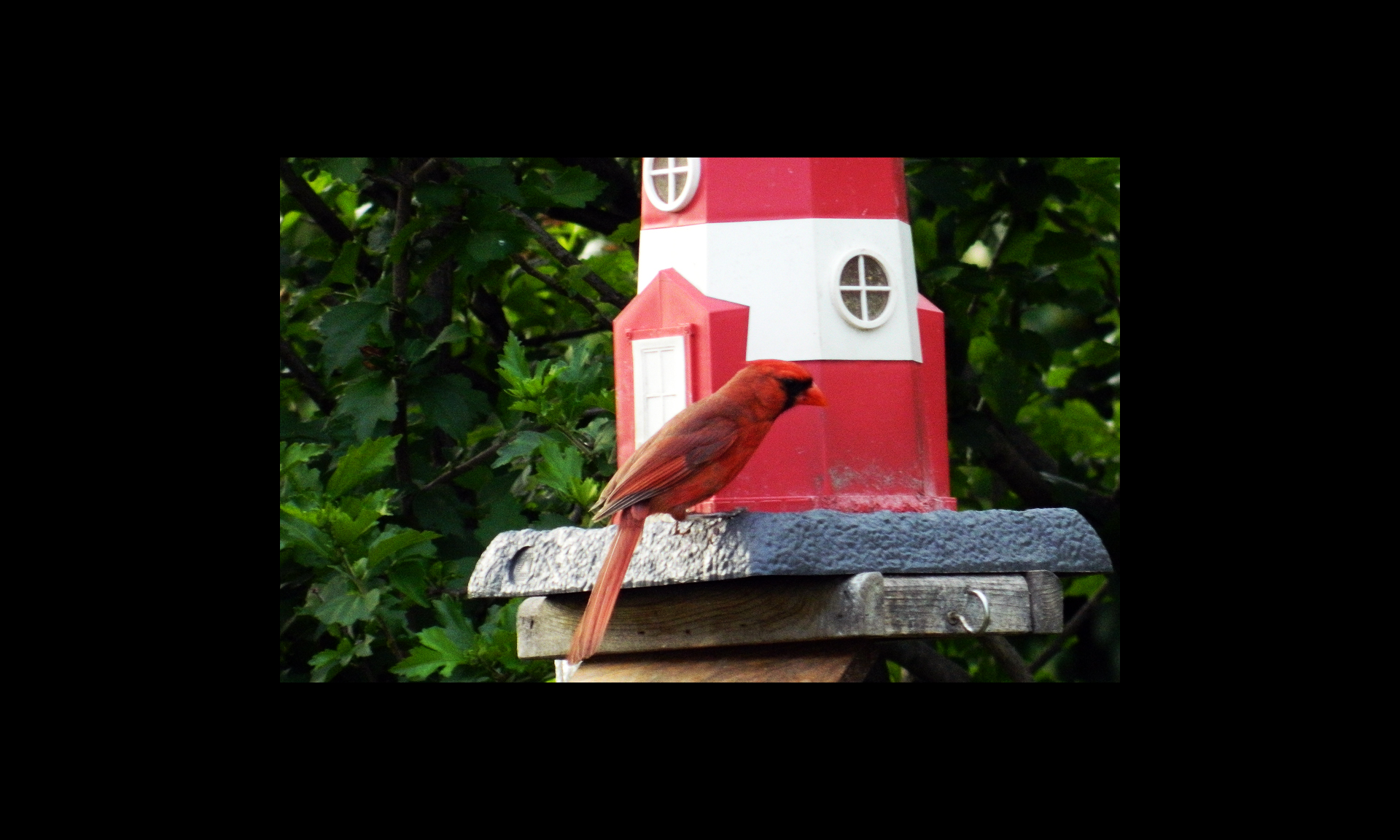
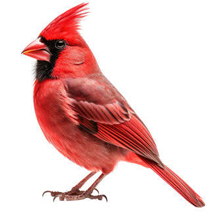
Brief Description: The Northern Cardinal is a popular, medium-sized songbird. Males feature brilliant red feathers with a black face mask. Females are olive-brown with soft red hints. Both sexes have a pointy crest on their head and a thick orange-red beak. They measure 8 to 9 inches long. The cardinal's name comes from Catholic church leaders who wear bright red robes. These birds live in the eastern and central United States. They do not migrate in the winter. Instead, they stay in the same area all year. Adults weigh about 1.5 to 1.7 ounces (42 to 48 grams) with a wingspan of 9 to 12 inches. They are very protective of their territory. Cardinals will often attack their own reflection in a car window or mirror because they think it is an intruder.
Plumage: The Northern Cardinal has distinct feather colors, called plumage. Males are brilliant red with a black face mask. Females are pale brown with red hints on their crest, wings, and tail. Both sexes share a sharp crest, long tail, and thick, cone-shaped red-orange bill. The bright color of the male comes from the carotenoid pigments in its food. A carotenoid is a natural color found in plants. When the male digests these foods, its body changes the yellow pigments into bright red. It uses this color to attract a mate. If a male eats a diet with only yellow pigments, its feathers will turn pale red. In rare cases, a cardinal has a genetic condition that stops it from turning yellow pigments into red ones. This creates a "yellow morph" cardinal with yellow feathers instead of red.
Habitat: The Northern Cardinal thrives in semi-open, brushy habitats that provide dense low foliage for nesting and high perches for singing. Highly adaptable, these birds are year-round residents that do not migrate, meaning they occupy the same local habitat through all seasons. Cardinals strictly avoid deep, unbroken forests and wide-open plains. Instead, they seek out transitional spaces known as "edge habitats". The borders of deciduous or mixed forests where sunlight reaches the ground, promoting thick undergrowth. Overgrown fields, shrubby fencerows, and dense briar patches. Suburban yards, urban parks, gardens, and orchards featuring heavy ornamental landscaping. Swamps, marshy thickets, and streamside vegetation. Desert washes, mesquite, and canyons in the American Southwest.
Egg & Nest Details: The Northern Cardinal builds a tightly constructed, cup-shaped nest to protect its distinctively speckled, smooth-shelled eggs. The Egg appearance: Smooth, glossy, and typically grayish-white, buff-white, or pale greenish-white. Markings: Heavily speckled or blotched with pale gray, brown, or lavender, usually concentrated around the larger end of the shell. Size: Approximately 1 inch long by 0.75 inches wide. Clutch Size: Females typically lay 2 to 5 eggs per brood, averaging 3 or 4. Incubation: Lasts 11 to 13 days, handled exclusively by the female while the male defends territory and brings her food.
Diet: Northern Cardinals are granivorous, meaning their diet is largely made up of seeds, grains, and fruits. They utilize their thick, cone-shaped beaks to easily crack through tough shells. While they primarily forage on the ground, you can readily attract them to platform or hopper bird feeders in your backyard. The Northern Cardinal diet shifts based on seasonal availability and nutritional needs. Roughly 90% of their year-round diet consists of weed seeds, grains, and wild seeds. Their absolute favorites include black oil sunflower seeds and safflower seeds. They consume a wide variety of wild fruits and berries, including dogwood, wild grape, mulberry, hackberry, blackberry, and sumac. During the spring and summer breeding season, cardinals supplement their diet with insects to gain extra protein. They eat beetles, grasshoppers, cicadas, katydids, caterpillars, and spiders. Nestlings are fed almost exclusively on soft-bodied insects like caterpillars to aid in muscle growth.
Sounds: The Northern Cardinal produces two primary categories of vocalizations: clear, rhythmic whistling songs and sharp, metallic "chip" calls. Unlike most songbirds, both male and female Northern Cardinals sing. The cardinal's song is a loud string of clear, whistled syllables lasting 2 to 3 seconds. It often speeds up at the end and finishes with a slow trill or a soft purr. The most common call is a sharp, brief, metallic "chip". This sound resembles two coins dropping onto each other with a "plink".
Brief Description: The Northern Cardinal is a popular, medium-sized songbird. Males feature brilliant red feathers with a black face mask. Females are olive-brown with soft red hints. Both sexes have a pointy crest on their head and a thick orange-red beak. They measure 8 to 9 inches long. The cardinal's name comes from Catholic church leaders who wear bright red robes. These birds live in the eastern and central United States. They do not migrate in the winter. Instead, they stay in the same area all year. Adults weigh about 1.5 to 1.7 ounces (42 to 48 grams) with a wingspan of 9 to 12 inches. They are very protective of their territory. Cardinals will often attack their own reflection in a car window or mirror because they think it is an intruder.
Plumage: The Northern Cardinal has distinct feather colors, called plumage. Males are brilliant red with a black face mask. Females are pale brown with red hints on their crest, wings, and tail. Both sexes share a sharp crest, long tail, and thick, cone-shaped red-orange bill. The bright color of the male comes from the carotenoid pigments in its food. A carotenoid is a natural color found in plants. When the male digests these foods, its body changes the yellow pigments into bright red. It uses this color to attract a mate. If a male eats a diet with only yellow pigments, its feathers will turn pale red. In rare cases, a cardinal has a genetic condition that stops it from turning yellow pigments into red ones. This creates a "yellow morph" cardinal with yellow feathers instead of red.
Habitat: The Northern Cardinal thrives in semi-open, brushy habitats that provide dense low foliage for nesting and high perches for singing. Highly adaptable, these birds are year-round residents that do not migrate, meaning they occupy the same local habitat through all seasons. Cardinals strictly avoid deep, unbroken forests and wide-open plains. Instead, they seek out transitional spaces known as "edge habitats". The borders of deciduous or mixed forests where sunlight reaches the ground, promoting thick undergrowth. Overgrown fields, shrubby fencerows, and dense briar patches. Suburban yards, urban parks, gardens, and orchards featuring heavy ornamental landscaping. Swamps, marshy thickets, and streamside vegetation. Desert washes, mesquite, and canyons in the American Southwest.
Egg & Nest Details: The Northern Cardinal builds a tightly constructed, cup-shaped nest to protect its distinctively speckled, smooth-shelled eggs. The Egg appearance: Smooth, glossy, and typically grayish-white, buff-white, or pale greenish-white. Markings: Heavily speckled or blotched with pale gray, brown, or lavender, usually concentrated around the larger end of the shell. Size: Approximately 1 inch long by 0.75 inches wide. Clutch Size: Females typically lay 2 to 5 eggs per brood, averaging 3 or 4. Incubation: Lasts 11 to 13 days, handled exclusively by the female while the male defends territory and brings her food.
Diet: Northern Cardinals are granivorous, meaning their diet is largely made up of seeds, grains, and fruits. They utilize their thick, cone-shaped beaks to easily crack through tough shells. While they primarily forage on the ground, you can readily attract them to platform or hopper bird feeders in your backyard. The Northern Cardinal diet shifts based on seasonal availability and nutritional needs. Roughly 90% of their year-round diet consists of weed seeds, grains, and wild seeds. Their absolute favorites include black oil sunflower seeds and safflower seeds. They consume a wide variety of wild fruits and berries, including dogwood, wild grape, mulberry, hackberry, blackberry, and sumac. During the spring and summer breeding season, cardinals supplement their diet with insects to gain extra protein. They eat beetles, grasshoppers, cicadas, katydids, caterpillars, and spiders. Nestlings are fed almost exclusively on soft-bodied insects like caterpillars to aid in muscle growth.
Sounds: The Northern Cardinal produces two primary categories of vocalizations: clear, rhythmic whistling songs and sharp, metallic "chip" calls. Unlike most songbirds, both male and female Northern Cardinals sing. The cardinal's song is a loud string of clear, whistled syllables lasting 2 to 3 seconds. It often speeds up at the end and finishes with a slow trill or a soft purr. The most common call is a sharp, brief, metallic "chip". This sound resembles two coins dropping onto each other with a "plink".