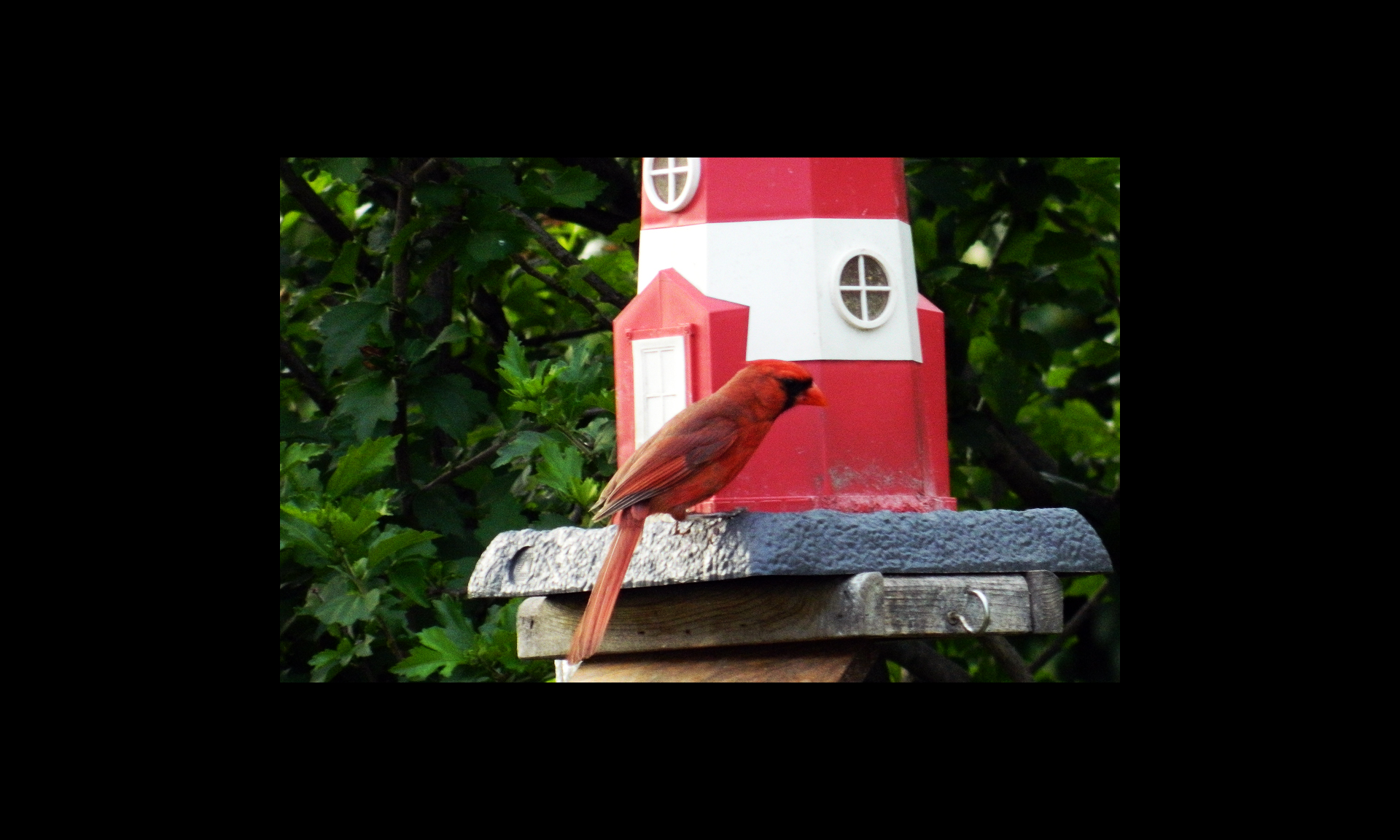
House Finch
Return to visitors index
Scientific Name:
Haemorhous mexicanus
Brief Description: The House Finch is a small, social bird native to North America. Males have bright red or orange heads and chests. Females are plain brown and streaked. They love city life, backyard feeders, and eating seeds. They are about 5 to 6 inches long. This is roughly the size of a common sparrow. These birds originally lived only in the western United States and Mexico. They were brought to New York in the 1940s and spread across the entire continent. They sing long, cheerful, twittering songs and are not shy around people.
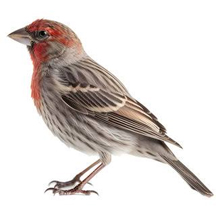
Plumage: House finches show dramatic differences between males and females. Adult males boast vibrant red or orangish-red coloring on their faces, throats, and upper chests, set against streaky brown wings and a brown-striped belly. Females and juveniles are entirely grayish-brown with blurry streaks and plain faces. It is easy to confuse house finches with purple finches. House Finches look like strawberry coloring (brighter red or orange) and have streaked brown bellies. Purple Finches look like they were dipped in raspberry juice (a deeper, purplish-pink color) with white bellies. They also lack the distinct white wing bars of the house finch.
Habitat: House Finches are highly adaptable, originally native to western North America, but now thrive coast-to-coast in human-altered landscapes. They prefer urban centers, suburbs, and farmlands, nesting and feeding near buildings, lawns, and small conifers, while actively avoiding unbroken forests and grasslands. Native to the arid deserts, chaparral, oak savannahs, and canyons of the American Southwest and Mexico, the House Finch has expanded its ecological range to become a common fixture nationwide. Following their accidental introduction to the Eastern United States in 1940 (where they were once marketed as "Hollywood Finches"), they successfully colonized the continent. They are also widespread in Hawaii.
Egg & Nest Details: House finch nests are compact, cup-shaped structures built from twigs, grasses, and feathers. The female lays 2 to 6 pale blue or white eggs with fine dark speckles, which she incubates for 13 to 14 days. Chicks hatch naked and leave the nest 12 to 19 days later. House finches are highly adaptable and frequently build nests in both natural and urban settings. You can often find them in trees, cactuses, rock ledges, building vents, ivy, and hanging planters, as well as on front door wreaths. The nest is constructed primarily by the female, taking anywhere from a few days to a week to complete. It features an outer cup of twigs, weed stems, and leaves, and is thickly lined with softer materials like string, wool, and feathers.
Diet: House finches are primarily vegetarians. Their natural diet consists almost entirely of weed seeds, wild plant materials, tree buds, and fruits. At backyard feeders, they are voracious consumers of black oil sunflower seeds, safflower, and thistle. House finches have distinct dietary preferences depending on the season. During spring they heavily consume tender new buds, flower parts, and tree blossoms. In the summer and fall they feast on wild and cultivated fruits, including mulberries, cherries, blackberries, and figs. During winter rely heavily on dried grains and weed seeds from plants like nettle and dandelion. They only occasionally (and sometimes accidentally) eat tiny insects like aphids while foraging.
Sounds: The House Finch makes a variety of bright, cheerful vocalizations, primarily categorized into jumbled warbling songs and sharp, repetitive contact calls. The male House finch sings a continuous, lively song that typically lasts about 3 seconds. Sound profile is a rapid string of short, high and low inflected notes. It sounds a bit slower, rougher, and less fluid than the songs of Purple or Cassin's Finches. It almost always concludes with a distinctive upward or downward slurred note, or a sharp, buzzy tone.
Brief Description: The House Finch is a small, social bird native to North America. Males have bright red or orange heads and chests. Females are plain brown and streaked. They love city life, backyard feeders, and eating seeds. They are about 5 to 6 inches long. This is roughly the size of a common sparrow. These birds originally lived only in the western United States and Mexico. They were brought to New York in the 1940s and spread across the entire continent. They sing long, cheerful, twittering songs and are not shy around people.
Plumage: House finches show dramatic differences between males and females. Adult males boast vibrant red or orangish-red coloring on their faces, throats, and upper chests, set against streaky brown wings and a brown-striped belly. Females and juveniles are entirely grayish-brown with blurry streaks and plain faces. It is easy to confuse house finches with purple finches. House Finches look like strawberry coloring (brighter red or orange) and have streaked brown bellies. Purple Finches look like they were dipped in raspberry juice (a deeper, purplish-pink color) with white bellies. They also lack the distinct white wing bars of the house finch.
Habitat: House Finches are highly adaptable, originally native to western North America, but now thrive coast-to-coast in human-altered landscapes. They prefer urban centers, suburbs, and farmlands, nesting and feeding near buildings, lawns, and small conifers, while actively avoiding unbroken forests and grasslands. Native to the arid deserts, chaparral, oak savannahs, and canyons of the American Southwest and Mexico, the House Finch has expanded its ecological range to become a common fixture nationwide. Following their accidental introduction to the Eastern United States in 1940 (where they were once marketed as "Hollywood Finches"), they successfully colonized the continent. They are also widespread in Hawaii.
Egg & Nest Details: House finch nests are compact, cup-shaped structures built from twigs, grasses, and feathers. The female lays 2 to 6 pale blue or white eggs with fine dark speckles, which she incubates for 13 to 14 days. Chicks hatch naked and leave the nest 12 to 19 days later. House finches are highly adaptable and frequently build nests in both natural and urban settings. You can often find them in trees, cactuses, rock ledges, building vents, ivy, and hanging planters, as well as on front door wreaths. The nest is constructed primarily by the female, taking anywhere from a few days to a week to complete. It features an outer cup of twigs, weed stems, and leaves, and is thickly lined with softer materials like string, wool, and feathers.
Diet: House finches are primarily vegetarians. Their natural diet consists almost entirely of weed seeds, wild plant materials, tree buds, and fruits. At backyard feeders, they are voracious consumers of black oil sunflower seeds, safflower, and thistle. House finches have distinct dietary preferences depending on the season. During spring they heavily consume tender new buds, flower parts, and tree blossoms. In the summer and fall they feast on wild and cultivated fruits, including mulberries, cherries, blackberries, and figs. During winter rely heavily on dried grains and weed seeds from plants like nettle and dandelion. They only occasionally (and sometimes accidentally) eat tiny insects like aphids while foraging.
Sounds: The House Finch makes a variety of bright, cheerful vocalizations, primarily categorized into jumbled warbling songs and sharp, repetitive contact calls. The male House finch sings a continuous, lively song that typically lasts about 3 seconds. Sound profile is a rapid string of short, high and low inflected notes. It sounds a bit slower, rougher, and less fluid than the songs of Purple or Cassin's Finches. It almost always concludes with a distinctive upward or downward slurred note, or a sharp, buzzy tone.