Hairy Woodpecker
Return to visitors index
Scientific Name:
Leuconotopicus villosus
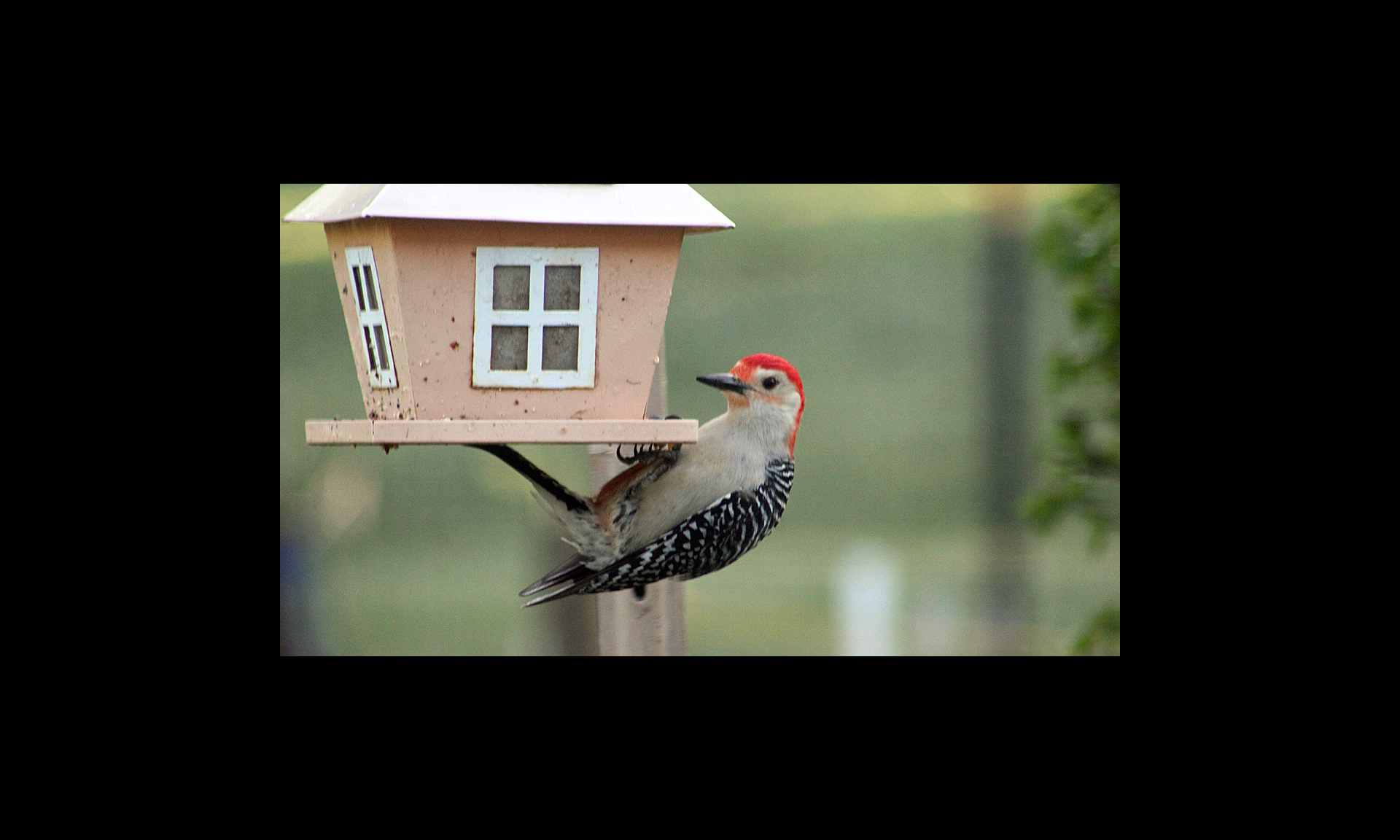
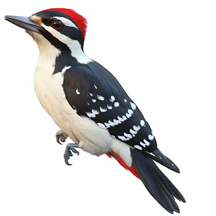
Brief Description: The Hairy Woodpecker is a bold, black-and-white North American bird. It is about the size of an American robin. It features a white stripe down its back and an extra-long, chisel-like beak. Males have a small red patch on the back of the head. The bill is large and robust. It is about as long as the bird's entire head. These birds have an erect, upright posture on trees. They use their long bills to drill into wood and hunt for insect larvae.
Plumage: The Hairy Woodpecker has bold black and white feathers. It features a bright white stripe down its black back and checkered black-and-white wings. The head has black and white stripes. The outer tail feathers are pure white. Males have a red patch on the back of the head. Adult males have a vivid red patch at the back of the head. Adult females lack this red patch completely. Their heads are strictly black and white. The wings are mostly black with neat white spots. Eastern birds have more white spots. Western birds have darker wings The outer tail feathers are clean white. This is a great way to tell it apart from the smaller Downy Woodpecker, which has black spots on its outer tail feathers.
Habitat: Hairy Woodpeckers require mature forests or woodlands with large-diameter trees. They are broadly distributed across North America, ranging from Alaska and Canada down to Central America. They are permanent residents that inhabit both deciduous and coniferous forests, recently burned areas, and are frequently spotted in parks and suburbs. They require large, mature trees for foraging and excavating cavities for roosting and nesting. They use thick trunks and large branches rather than the smaller twigs and weed stalks favored by the smaller Downy Woodpecker.
Egg & Nest Details: Hairy Woodpeckers dig 8 to 12-inch deep nest cavities in dead trees or rotting branches. The female lays 3 to 6 solid white eggs on a soft bed of wood chips. Both parents share nesting duties. The eggs hatch in about 11 to 12 days. The chicks leave the nest after 28 to 30 days. Hairy Woodpeckers have distinct nesting habits that help them protect their young from predators. Both parents help dig the hole. The entrance is small (about 2 inches tall). It is often dug on the underside of a tilted branch. This keeps out rain and pests like squirrels.
Diet: Hairy Woodpeckers are primarily insectivores, with 75% to 80% of their diet consisting of insects—especially wood-boring and bark beetle larvae. The remaining portion of their diet is made up of fruits, nuts, seeds, tree sap, and suet from backyard feeders. The majority of their daily foraging involves hammering, chipping, and excavating deep into dead or living trees to find bugs. They are highly beneficial for forests and orchards because they target destructive pests.
Sounds: The Hairy Woodpecker has three primary sounds: an explosive "peek" call, a rhythmic whinny or rattle, and a rapid territorial drumming. While its vocalizations are frequently confused with the smaller Downy Woodpecker, the Hairy Woodpecker's sounds are consistently louder, stronger, and more energetic.
Brief Description: The Hairy Woodpecker is a bold, black-and-white North American bird. It is about the size of an American robin. It features a white stripe down its back and an extra-long, chisel-like beak. Males have a small red patch on the back of the head. The bill is large and robust. It is about as long as the bird's entire head. These birds have an erect, upright posture on trees. They use their long bills to drill into wood and hunt for insect larvae.
Plumage: The Hairy Woodpecker has bold black and white feathers. It features a bright white stripe down its black back and checkered black-and-white wings. The head has black and white stripes. The outer tail feathers are pure white. Males have a red patch on the back of the head. Adult males have a vivid red patch at the back of the head. Adult females lack this red patch completely. Their heads are strictly black and white. The wings are mostly black with neat white spots. Eastern birds have more white spots. Western birds have darker wings The outer tail feathers are clean white. This is a great way to tell it apart from the smaller Downy Woodpecker, which has black spots on its outer tail feathers.
Habitat: Hairy Woodpeckers require mature forests or woodlands with large-diameter trees. They are broadly distributed across North America, ranging from Alaska and Canada down to Central America. They are permanent residents that inhabit both deciduous and coniferous forests, recently burned areas, and are frequently spotted in parks and suburbs. They require large, mature trees for foraging and excavating cavities for roosting and nesting. They use thick trunks and large branches rather than the smaller twigs and weed stalks favored by the smaller Downy Woodpecker.
Egg & Nest Details: Hairy Woodpeckers dig 8 to 12-inch deep nest cavities in dead trees or rotting branches. The female lays 3 to 6 solid white eggs on a soft bed of wood chips. Both parents share nesting duties. The eggs hatch in about 11 to 12 days. The chicks leave the nest after 28 to 30 days. Hairy Woodpeckers have distinct nesting habits that help them protect their young from predators. Both parents help dig the hole. The entrance is small (about 2 inches tall). It is often dug on the underside of a tilted branch. This keeps out rain and pests like squirrels.
Diet: Hairy Woodpeckers are primarily insectivores, with 75% to 80% of their diet consisting of insects—especially wood-boring and bark beetle larvae. The remaining portion of their diet is made up of fruits, nuts, seeds, tree sap, and suet from backyard feeders. The majority of their daily foraging involves hammering, chipping, and excavating deep into dead or living trees to find bugs. They are highly beneficial for forests and orchards because they target destructive pests.
Sounds: The Hairy Woodpecker has three primary sounds: an explosive "peek" call, a rhythmic whinny or rattle, and a rapid territorial drumming. While its vocalizations are frequently confused with the smaller Downy Woodpecker, the Hairy Woodpecker's sounds are consistently louder, stronger, and more energetic.